Is Your Concrete Sinking, Cracking or Becoming Uneven?
Maybe one side of your driveway has dropped. There’s a new bump where the driveway meets the garage. A sidewalk that used to be flat has become a trip hazard. Or you’ve noticed a gap underneath the edge of your concrete that wasn’t there before.
Those are all signs that something may be changing underneath the slab.
Environmental Foam Solutions provides concrete lifting, leveling, void filling and soil stabilization in Dade City and surrounding Pasco County as part of our concrete repair services throughout Central Florida.
Sometimes the concrete itself is still in good condition. The problem is the ground underneath it. When soil settles, shifts or washes away, part of the slab can lose the support it once had.
When that happens, replacing the concrete isn’t always the only option.
EFS uses polyurethane to fill empty spaces beneath concrete, restore support and, when conditions allow, raise sunken sections.
Why Concrete Settles in Dade City
Dade City isn’t as flat as many parts of Florida. The rolling ground and changes in elevation affect where rainwater travels across a property.
Dade City’s own stormwater planning describes a sandy ridge around the downtown area, with higher land draining toward lower parts of the city.
You can see those elevation changes throughout the area. One home may sit higher than the road, a driveway may slope toward a lower part of the property, or rainwater may naturally follow one side of a yard.
That matters when it comes to concrete.
During Florida’s heavy rains, water can repeatedly travel alongside a driveway, sidewalk, patio or other slab. If it finds a way underneath the concrete, it can move some of the sand and soil supporting it. The ground beneath concrete can also settle naturally over time.
Eventually, you may notice a low corner, a new crack, an uneven joint or a space opening underneath the edge of the slab.
Sometimes the first clue isn’t a crack at all. Rainwater may start sitting somewhere it never used to. The driveway may no longer meet the garage the same way. A gate or screen door may begin rubbing. Dirt or mulch may seem to disappear from alongside the concrete.
Those small changes can be signs that the slab has moved.
There’s a Gap Under My Driveway. Is That a Problem?
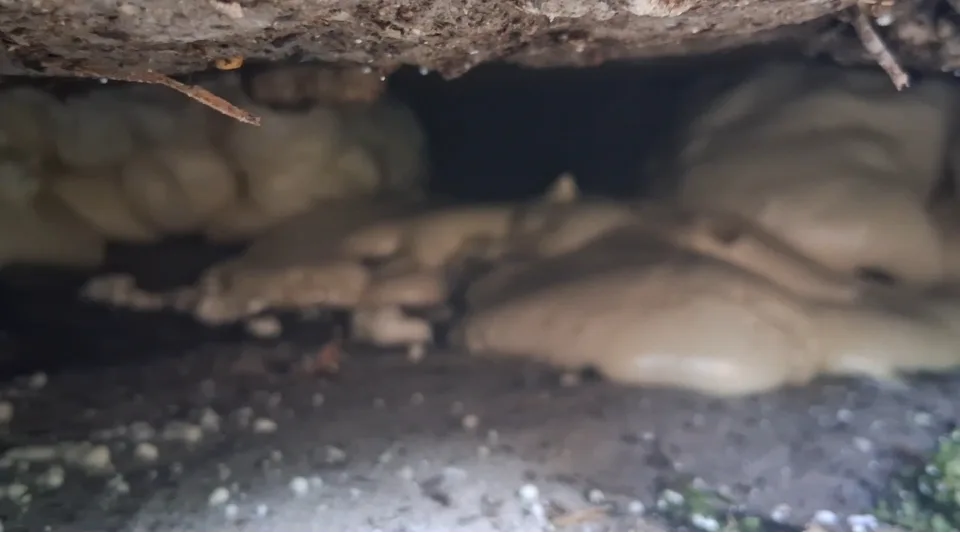
If you can see underneath the edge of your driveway, part of the slab may no longer have direct support beneath it.
We call that empty space a void.
What you can see from the edge doesn’t always show how far that empty space extends underneath the concrete. A slab can still look fairly level while having unsupported areas beneath it.
That’s why some projects need void filling even when very little lifting is needed. Our driveway repair and concrete lifting process focuses on restoring support beneath the existing slab when the concrete is still a good candidate for repair.
Why Is My Driveway Lower Than My Garage?
The driveway and garage floor don’t necessarily settle together.
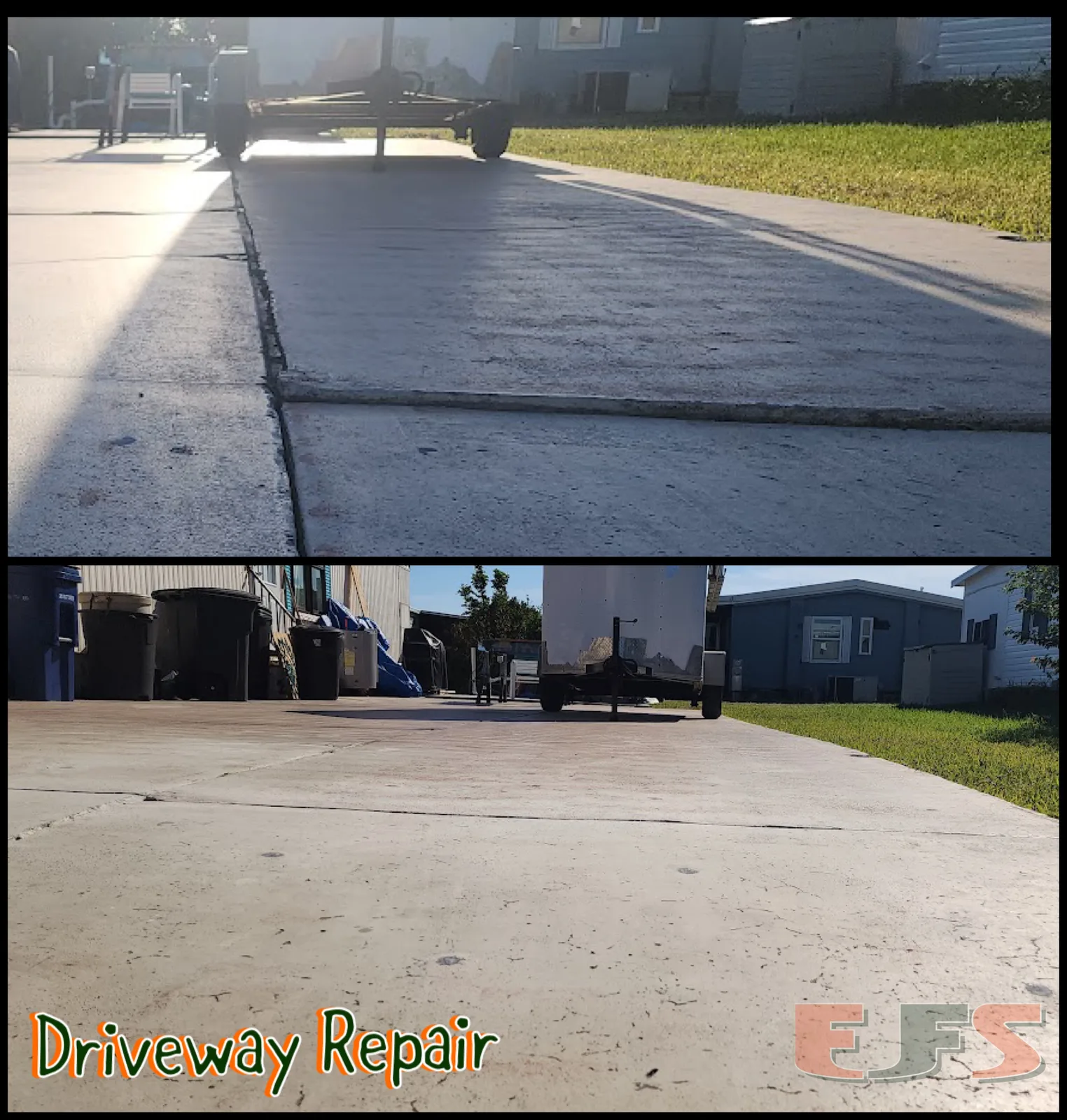
If the ground beneath the driveway settles while the garage floor stays in place, a drop or bump can develop where the two meet. Depending on the condition of the concrete, we may be able to raise the settled section without disturbing the rest of the driveway.
Sometimes only one section needs correction. We look at how the entire area has moved before deciding what should actually be lifted.
Do I Have to Replace Cracked or Uneven Concrete?
Not necessarily.
A crack doesn’t automatically mean the entire slab is bad.
Sometimes concrete cracks because one section has settled while another section stayed in place. That difference puts stress on the slab.
We look at the condition of the concrete, how the sections have moved, whether support is missing underneath and what can realistically be corrected.
If the slab is still in repairable condition, polyurethane may be used to fill the empty space underneath and carefully raise the sunken section.
If the concrete is badly deteriorated or replacement makes more sense, we’ll tell you that too.
Before Repairing Cracks or Resurfacing Concrete
If you’re noticing cracks in a driveway, pool deck or patio, it helps to understand why they formed before making surface repairs.
Sometimes a crack is simply a surface issue. Other times, cracks develop because part of the slab has settled or lost support underneath. In those situations, filling the crack or resurfacing the concrete doesn’t address what caused the movement.
EFS doesn’t provide resurfacing or cosmetic crack repair. We evaluate what’s happening beneath the concrete and, when needed, use polyurethane to fill voids, restore support and lift settled areas.
Driveways, Sidewalks and Pool Decks Can Settle Differently
Concrete problems don’t always look the same.
On a driveway, you may notice a low section near the garage, a dropped corner or an uneven joint every time you drive over it.
On a sidewalk, one panel may sink while the next stays in place, creating a raised edge that catches your shoe or becomes a trip hazard. When the concrete itself is still in good condition, sidewalk repair using polyurethane lifting may be able to raise the lower section without tearing it out.
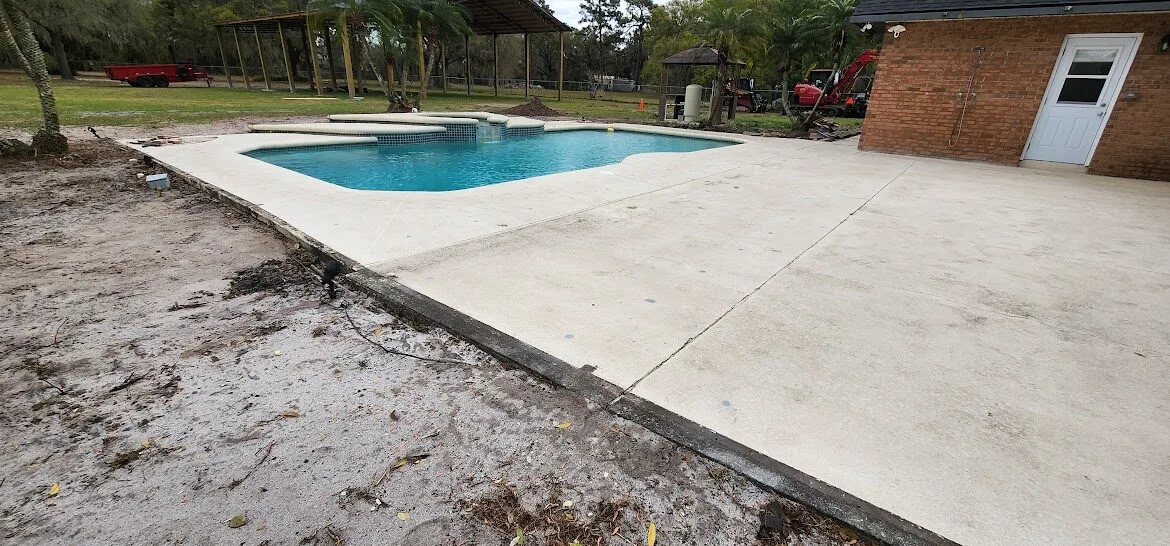
Around a pool, you may see a low area, a growing crack, an uneven joint or water collecting where it used to drain properly. Our pool deck repair work focuses on restoring support beneath settled sections and carefully lifting the concrete when conditions allow.
Patios and entryways can show similar changes.
We don’t assume every section needs to move just because one part has settled. Sometimes one panel needs lifting while the surrounding concrete simply needs to be checked for support.
How Does Polyurethane Concrete Lifting Work?
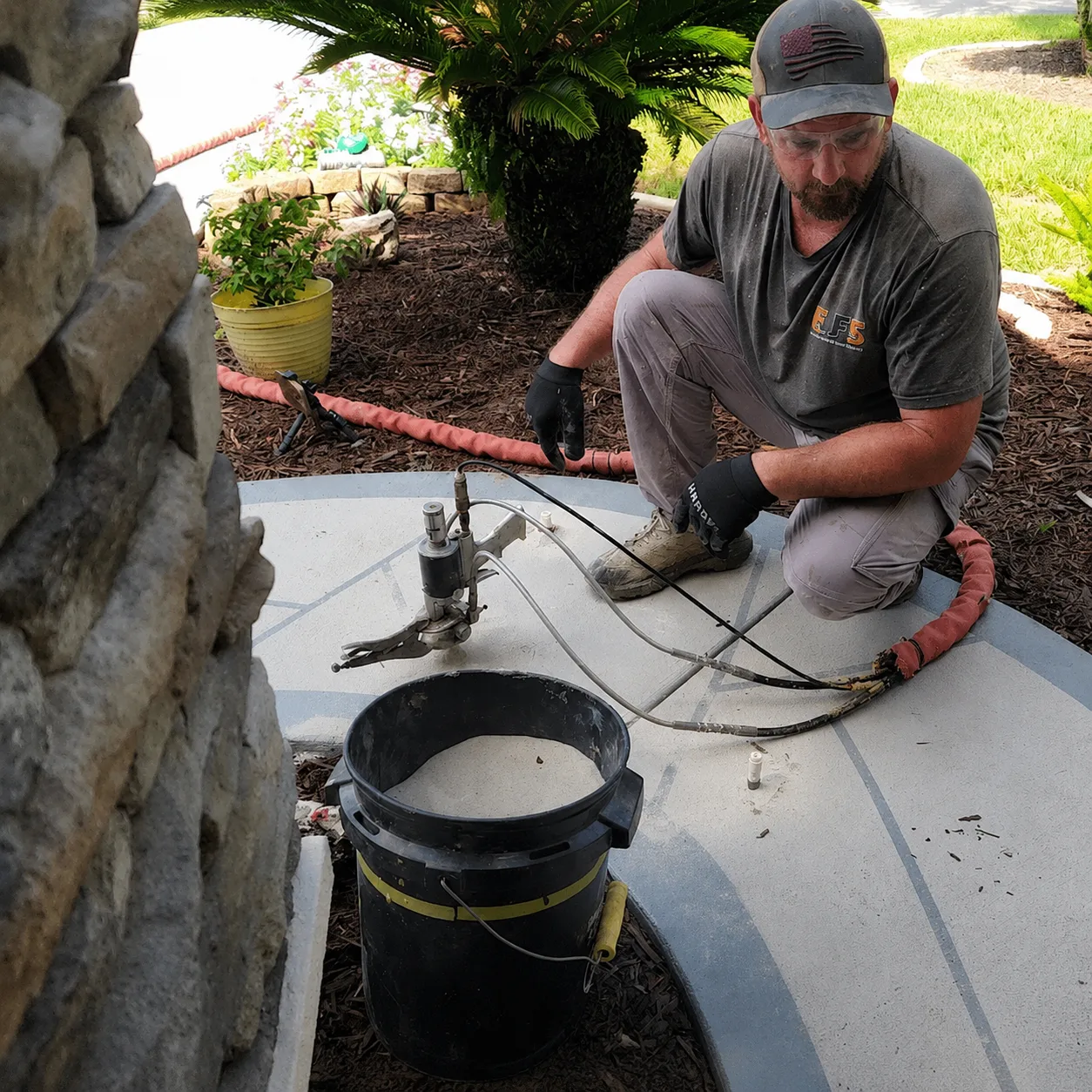
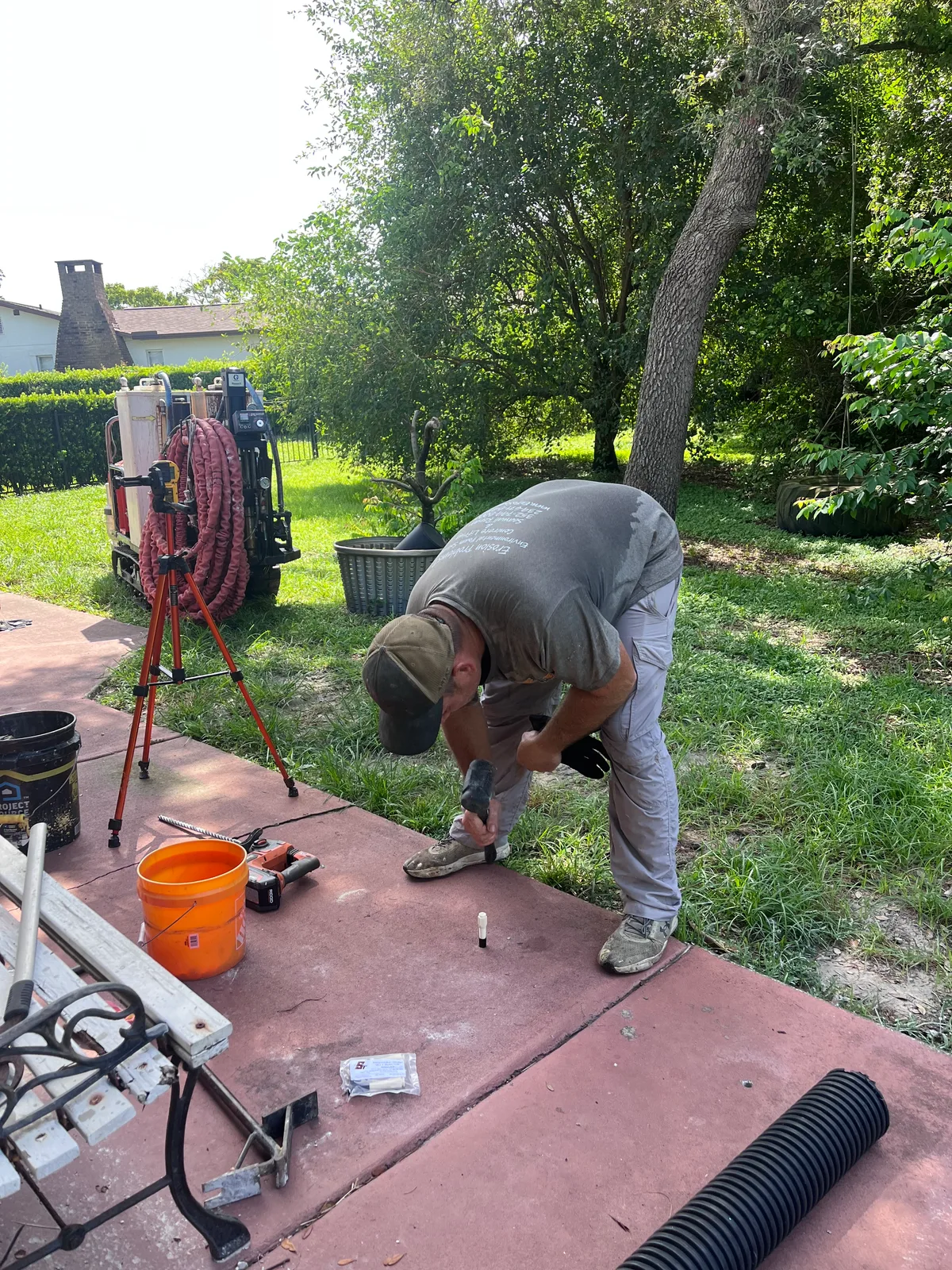
To reach underneath the slab, we drill small injection holes through the concrete.
Polyurethane is injected below the slab, where it expands. Depending on what we find, that expansion can fill empty spaces, restore support and carefully lift settled concrete.
The injection holes are patched when the work is finished.
For homeowners who have never seen concrete lifting done before, the process is usually much less disruptive than they expect.
When the existing slab is still a good candidate for repair, there may be no reason to tear out and replace the entire section just because part of it has settled.
What Does Soil Stabilization Mean?
Sometimes the problem goes deeper than an empty space directly beneath the concrete. The ground below may also need additional support.
That’s where soil stabilization comes in.
Polyurethane can be injected into problem areas below the surface to help improve support in the soil.
Not every project needs the same repair. One Dade City property may mainly need concrete lifting. Another may need void filling. In some situations, additional stabilization beneath the slab is also important.
That’s why we look at what is actually happening at the property instead of treating every sunken slab the same way.
How Do You Know How Far to Raise the Concrete?
We measure it.
Trying to judge concrete movement by eye alone can be misleading, especially around Dade City where properties can have noticeable changes in elevation.
EFS uses a rotating laser level when needed to check elevations and monitor the slab while we’re lifting it.
The goal isn’t to force older concrete into a position it can’t safely reach. We’re looking for a controlled, practical correction.
Sometimes a relatively small amount of movement can make a big difference in an uneven joint, driveway transition or sidewalk trip hazard.
Experience That Started Long Before EFS
Environmental Foam Solutions has served Florida since 2016, but our experience in the stabilization industry started years earlier.
Shawn started on a grouting crew for a large foundation and soil stabilization company, eventually working with multiple stabilization methods and helping train crews in polyurethane injection. Jessica worked for the same company on the office side of the business.
That experience taught us something important: not every concrete problem needs a major foundation repair.
A settled driveway, cracked pool deck or void beneath a sidewalk can look alarming, but sometimes the problem is limited to the slab and the support beneath it. We look at what is actually happening before recommending a repair.
Today, Shawn and Jessica personally inspect and perform EFS projects. If polyurethane is appropriate, we’ll explain why. If replacement or another type of repair makes more sense, we’ll tell you that too.
No sales team. No separate crew. Just the owners doing the work.
You can also see examples of our concrete lifting and stabilization projects in our Our Work gallery.
Is It Time to Have Your Concrete Checked?
If you’re looking at your driveway, sidewalk, pool deck, patio or entryway thinking, “That didn’t used to look like that,” it’s probably worth having it checked.
Environmental Foam Solutions provides polyurethane concrete lifting, concrete leveling, void filling and soil stabilization throughout Dade City and surrounding Pasco County.
Whether you’ve found a gap beneath your driveway, a sidewalk has become a trip hazard, your pool deck is settling or you’re simply not sure why your concrete has moved, we’ll take a look and explain what we find.
Free inspections
Environmental Foam Solutions
352-799-8000
Lift • Level • Stabilize
Owner-operated • Licensed & insured • Serving Florida since 2016