Void Filling · Erosion Repair · Subgrade Compaction
Soil Stabilization & Void Filling
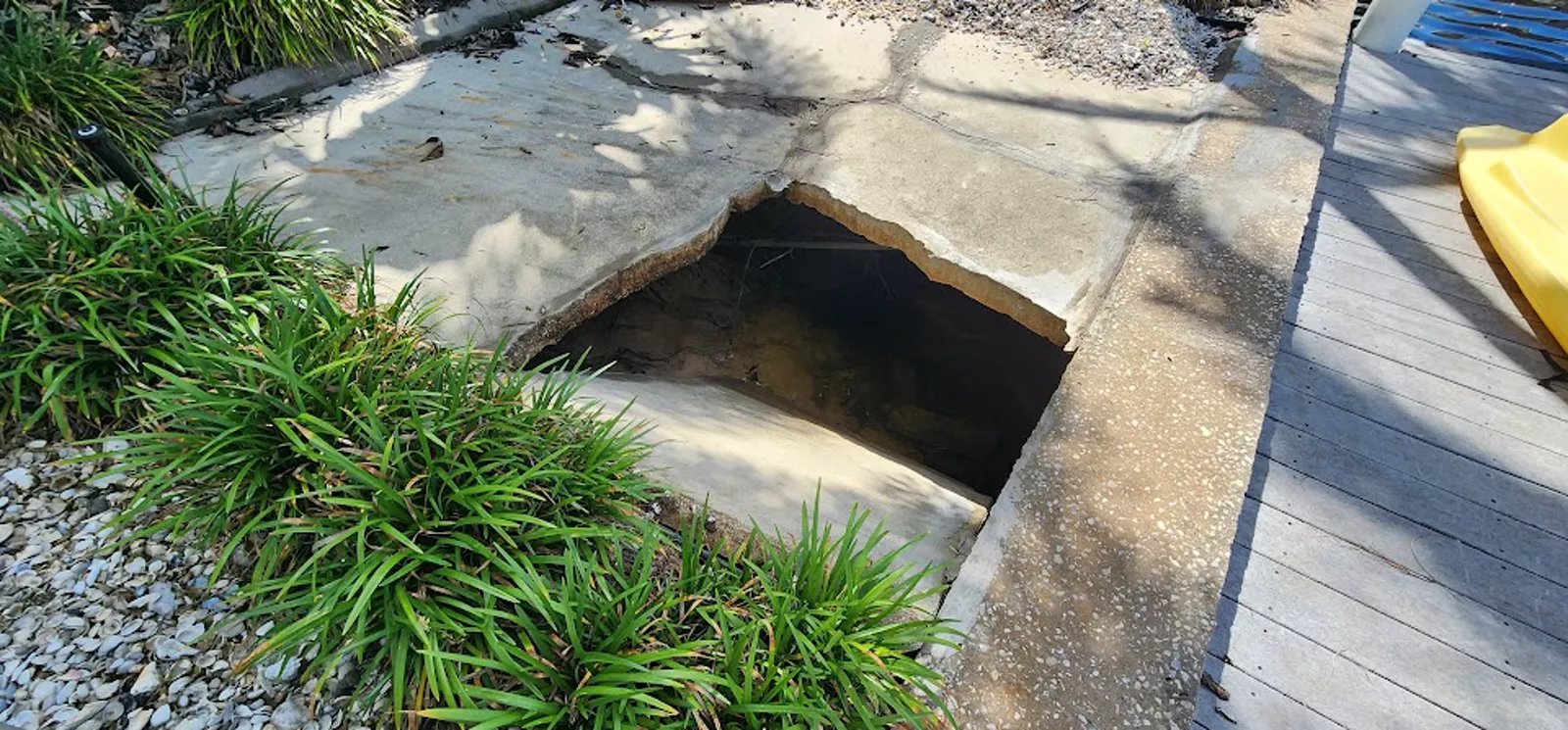
Voids around your property, sand washing out at the end of your driveway, cracks forming around your pool deck, popping or loose tiles, soil disappearing from beneath concrete, or erosion developing behind a seawall. Those can all be signs the problem isn't just the concrete. It may be what is happening underneath it.
Southwest Florida? Call (239) 671-8973
Florida's sandy soil can move more easily than many homeowners realize. Heavy rain, poor drainage, roof runoff, plumbing or irrigation leaks, erosion, and repeated water movement can gradually carry soil away from beneath concrete or leave weak areas underground.
At first, the signs may seem minor. You might notice a little sand appearing at the end of the driveway, a small gap beneath the edge of a slab, a crack that keeps coming back, tiles beginning to loosen or pop, or an area around the seawall where soil seems to be disappearing.
What you can see on the surface may only be part of the problem underneath.
When soil is lost, the concrete above it no longer has the same support it once did. Over time, that can lead to larger voids, cracking, settling, uneven concrete, and continued movement.
That is where soil stabilization, concrete stabilization, and polyurethane void filling can help.
Why Soil Support Fails
Concrete depends on the material underneath it for support.
When that soil washes away, settles, loosens, or shifts, part of the slab may be left sitting over an unsupported area. The concrete can sometimes bridge across that space for a while, which means a void can be developing even before you see significant sinking at the surface.
As the unsupported area grows, stress is no longer distributed evenly through the slab. Cracks may develop. One side can begin to drop. Joints can become uneven. A driveway may start sinking near an edge or drainage area. Around a pool deck or tiled patio, movement in the concrete below may contribute to tiles cracking, loosening, sounding hollow, or popping.
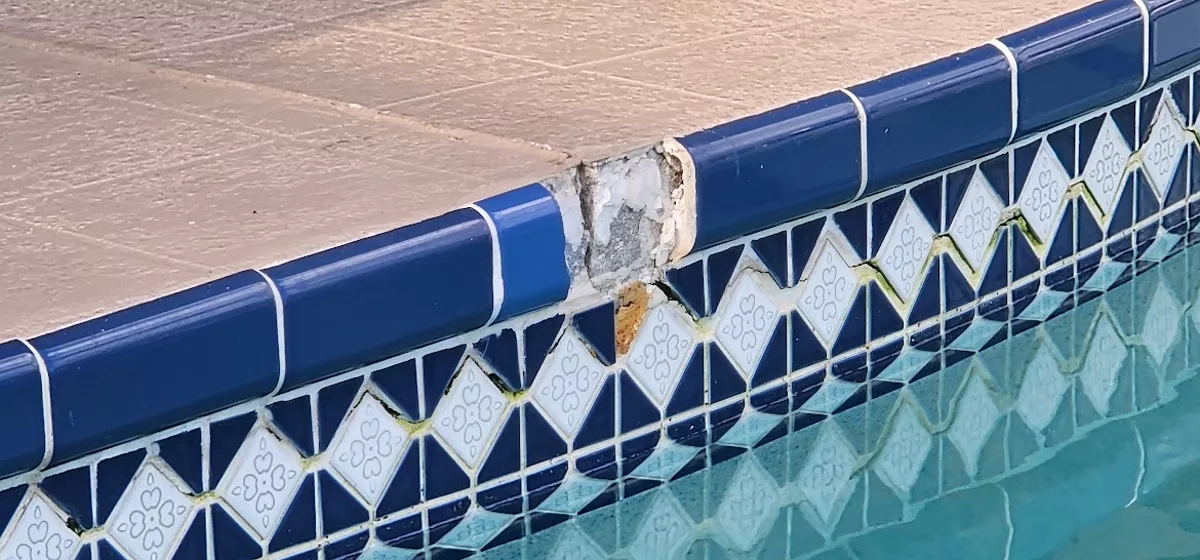
Sometimes the problem develops because water repeatedly moves through the same area. In other cases, fill or poorly compacted soil beneath the concrete may settle over time and leave the slab without consistent support.
The cause can be different from property to property, but the result is similar: the concrete above no longer has consistent support.
Where Is All That Sand Coming From?
If you keep finding sand at the end of your driveway, along the edge of a walkway, beside a pool deck, or in another area where it was not there before, it may be worth finding out where it is coming from.
Water can slowly carry fine soil particles away from beneath concrete. It does not necessarily take one major storm or dramatic washout. A smaller amount of water repeatedly traveling through the same area can cause soil loss over time.
Roof runoff may be directed beside a driveway. Water may collect along the edge of a slab. An irrigation or plumbing leak may go unnoticed. Rainwater may continually follow the same drainage path.
As that soil leaves, a space can develop beneath the concrete.
If you are seeing sand washing out from under a driveway, soil washing out from beneath concrete, or erosion under concrete, an unsupported area may already be developing below the slab.
The surface may continue looking relatively normal while the area underneath becomes less supported.
If a driveway has already started settling or becoming uneven, our driveway concrete lifting and leveling service may be appropriate in addition to stabilization.
Signs You May Have a Void
Voids are not always obvious from the surface.
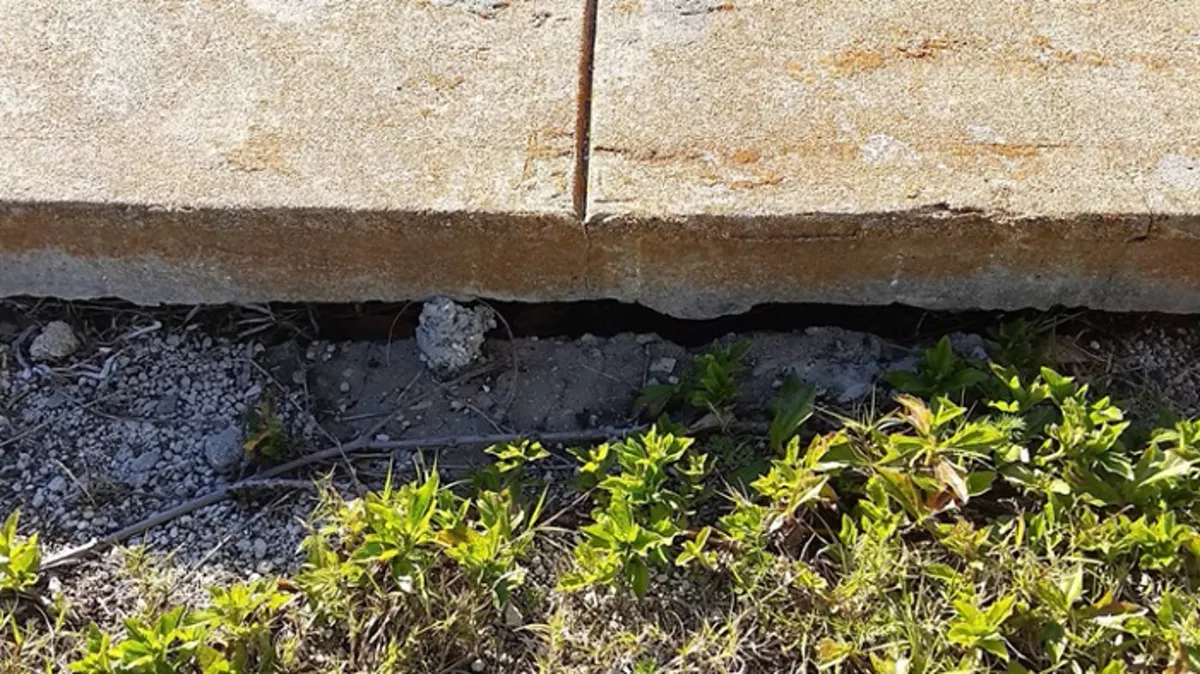
Sometimes the first sign is a visible gap beneath the edge of a slab. Other times it is recurring cracking, a hollow-sounding section of concrete, loose or popping tile, settlement near a joint, or soil that keeps disappearing around the same area.
Many homeowners first start looking for answers because they are asking, “Why is my concrete cracking?” “Why is my driveway sinking?” or “Why does my pool deck sound hollow?”
Around pool decks, you may notice cracks that keep returning, tiles that loosen repeatedly, or areas that no longer feel as solid as the surrounding deck.
Around driveways and sidewalks, one section may begin dropping while the adjoining slab stays in place.
The important thing is not just the symptom itself, but whether those symptoms are connected to a loss of support underneath the concrete.
Hidden Voids Beneath Concrete
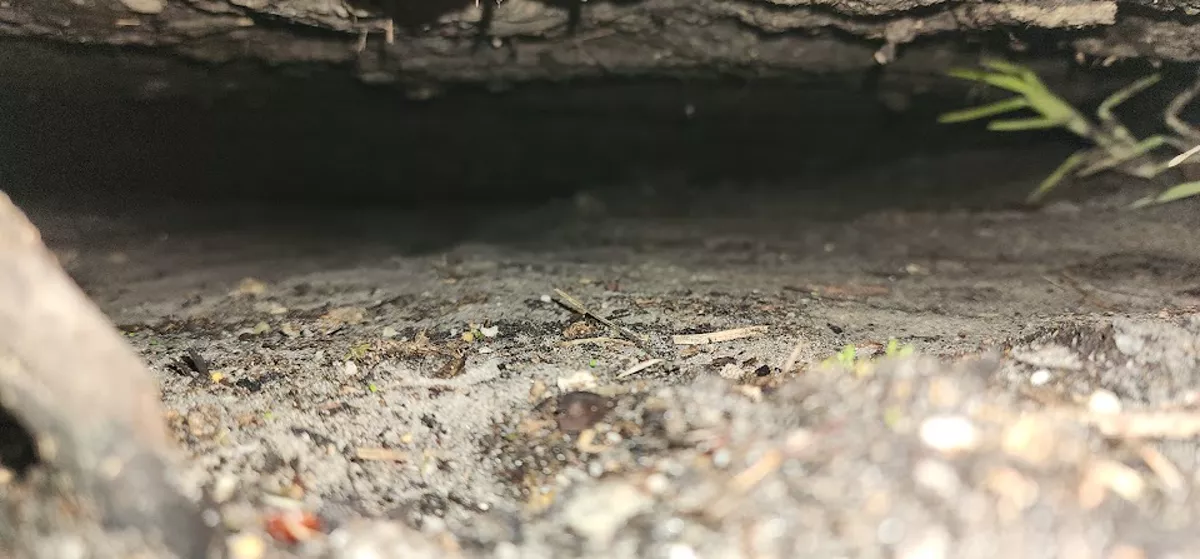
One of the difficult things about underground voids is that you cannot always tell their size by looking at the exposed edge.
A small opening beneath a slab may continue much farther underneath than what is visible from the outside.
A visible gap under a driveway, sidewalk, patio, or pool deck may only show a small part of the actual void beneath the concrete.
Concrete is strong enough to bridge over unsupported areas temporarily. That can make everything appear fine from above even while the support underneath has changed.
Eventually, the slab may begin reacting to that loss of support.
Vehicle traffic, foot traffic, equipment, weather, and the weight of the concrete itself can put additional stress on an already unsupported area.
That is why we look at the surrounding conditions instead of judging a void only by what is visible from the edge.
Soil Stabilization vs. Concrete Lifting
Soil stabilization and concrete lifting are related, but they are not always the same thing.
If concrete has already settled, polyurethane may be used to fill the empty space while carefully lifting the slab toward the desired position.
But if the concrete is still at the proper height, we do not necessarily want it to move.
In those situations, the objective is stabilization.
Polyurethane can be used to fill the void and restore support beneath the concrete while keeping the slab where it is.
Sometimes the goal is lifting. Sometimes it is stabilization. Often it is a combination of both.
For concrete that has already settled, our sidewalk repair and leveling and driveway repair pages explain more about the lifting process.
How Polyurethane Void Filling Works
Small injection points allow us to place a two-part polyurethane material beneath the affected area.
Once injected, the material reacts and expands into available void space. This allows it to reach areas beneath the concrete that would otherwise be difficult to access without removing the slab.
The polyurethane cures quickly and is lightweight, so we are not adding large amounts of heavy fill to soil that may already be unstable.
When concrete also needs to be raised, we monitor movement with a rotating laser level as the material is injected.
When lifting is not needed, the focus is simply on filling the void and creating support beneath the area.
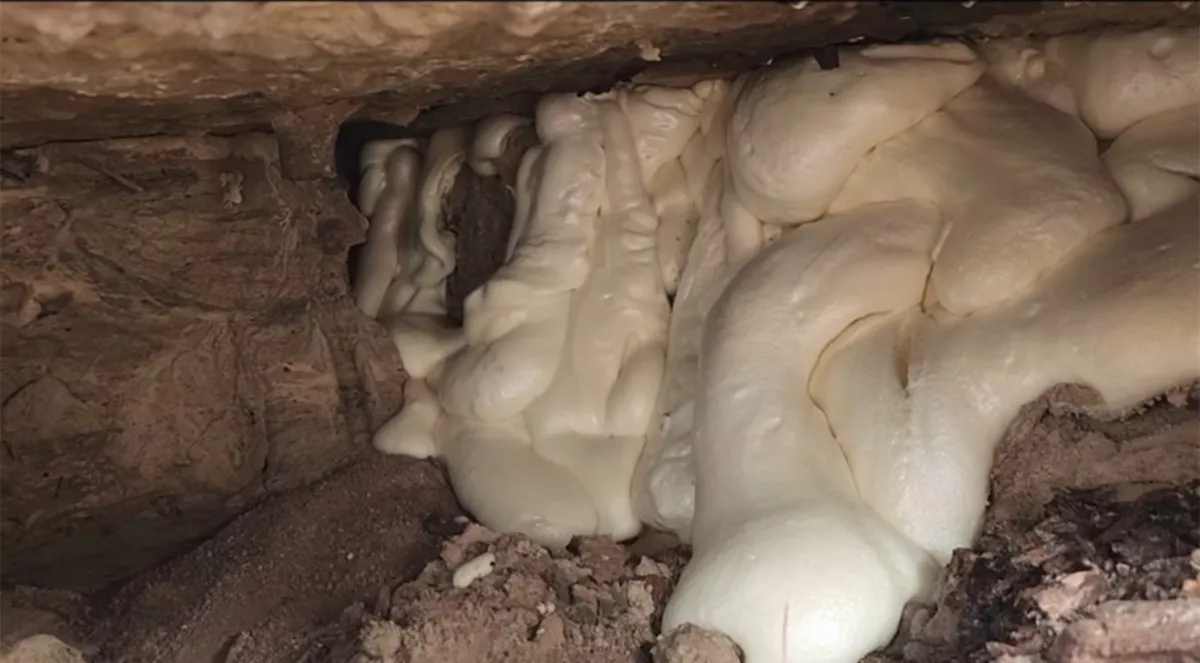
Watch polyurethane foam expand and fill a void in real time: liquid in, void filled, soil stabilized.
Common Areas We Stabilize
Soil loss and underground voids can develop in many different areas around a property.
We commonly see these problems beneath driveways, sidewalks, pool decks, patios, walkways, entryways, garage floors, and other concrete slabs.
They can also affect residential, commercial, HOA, and municipal properties.
The location may be different, but the basic issue remains the same: when material disappears from beneath concrete, the surface above can eventually begin to move.
Our pool deck repair, driveway repair, and sidewalk repair pages provide more information about stabilization and lifting in those specific areas.
Seawall Erosion and Soil Loss
On waterfront properties, soil can wash out or migrate from behind a seawall and leave empty spaces beneath nearby walkways, patios, pool decks, or other concrete.
You may notice soil disappearing, low areas forming near the wall, or concrete beginning to settle as support is lost.
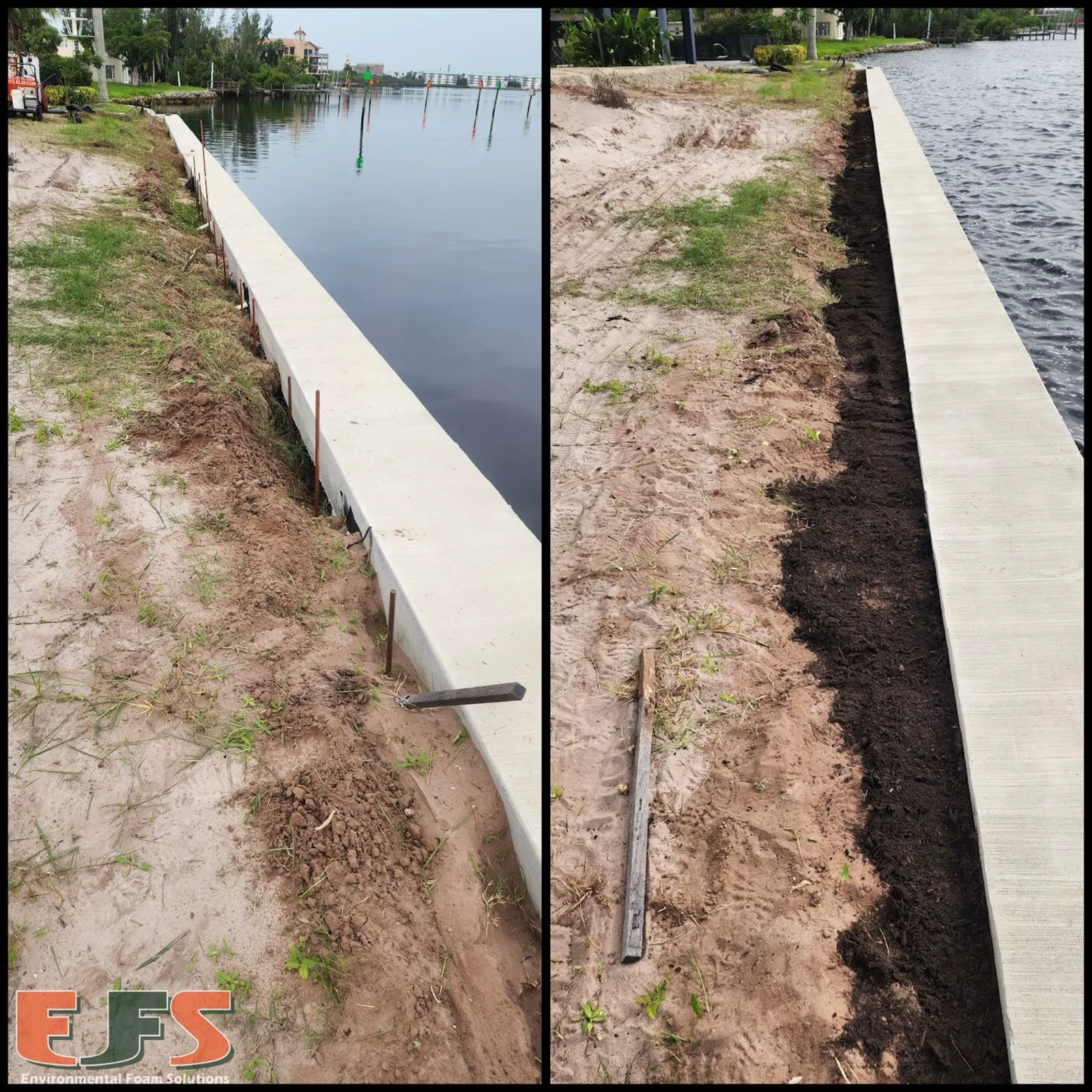
Our seawall soil stabilization service focuses specifically on erosion, washout, and voids around seawalls.
Why Drainage Still Matters
Soil stabilization can restore support where material has already been lost, but the source of continued water movement should also be addressed whenever possible.
If a downspout keeps discharging beside a driveway, an irrigation line continues leaking, or drainage repeatedly sends water beneath the same area, the conditions that contributed to the original washout are still there.
Stabilization addresses the damage that has already occurred.
Correcting drainage, runoff, leaks, or other water problems helps address why it occurred.
Both pieces are important when trying to reduce the chance of the same conditions continuing.
Stabilize Before Resurfacing
If support has been lost underneath a slab, it should be addressed before investing in surface repairs.
Resurfacing, coatings, pavers, tile, and other finishes change the appearance of the concrete. They do not fill the empty space underneath it.
You can put a beautiful new finish over a slab, but if that slab continues moving because it is unsupported below, the new surface may eventually move with it.
That is especially important with pool decks and driveways where homeowners may be preparing to invest in resurfacing, coatings, or new tile.
Making sure the concrete is supported first gives you a better starting point for whatever you plan to put on top of it.
Our pool deck repair and driveway repair pages explain more about stabilizing concrete before resurfacing or coating work is completed.
When Polyurethane Is the Right Repair
Polyurethane void filling can be a less disruptive way to restore support because many underground areas can be reached through small injection points instead of removing large sections of concrete or landscaping.
That does not mean polyurethane is the right repair for every situation.
Some problems may require drainage work, excavation, structural repair, replacement, or another type of correction.
Part of the inspection is determining whether polyurethane is appropriate for the conditions at the property.
If it is not the right solution, we would rather identify that before any work is performed.
Soil Stabilization & Void Filling Cost
Every void is different, which makes it difficult to give one standard price without seeing the property.
The amount of polyurethane required can depend on how large the void is, how far it extends beneath the concrete, accessibility, how much material has been lost, and whether the slab also needs to be lifted.
A small void beneath one section of concrete is very different from widespread washout around a pool deck, driveway, or waterfront area.
That is why we provide free inspections and evaluate the actual condition before recommending a repair.
Serving Central and Southwest Florida
You do not need to diagnose the problem yourself.
If you are seeing sand where it should not be, soil disappearing beneath concrete, recurring cracks, popping or loose tiles, hollow areas, settlement, a gap under a slab, or signs of erosion, we can take a look at what is happening and determine whether there appears to be a loss of support.
Sometimes the solution is concrete lifting. Sometimes it is void filling or soil stabilization. In other situations, something else needs to be corrected before polyurethane would make sense.
Environmental Foam Solutions has provided polyurethane concrete lifting and stabilization services since 2016. We provide free inspections throughout our Central Florida and Southwest Florida service areas.
You can also visit Our Work to see real examples of concrete lifting, soil stabilization, void filling, erosion, pool deck, driveway, and sidewalk projects we have completed throughout Florida.
Don't replace it. Re-level it.
Lift • Level • Stabilize
Get a Free Soil Stabilization Inspection
Serving Crystal River, Homosassa, Beverly Hills, Inverness, Spring Hill, Brooksville, Weeki Wachee, Hernando Beach, Wesley Chapel, Dade City, Zephyrhills, Land O' Lakes, Tampa, Lutz, Clearwater, St. Petersburg, Orlando, Winter Park, Clermont, Groveland, The Villages, North Port, Sarasota, Venice, Bradenton, Port Charlotte, Punta Gorda, Englewood, Rotonda West, Fort Myers, and Cape Coral, and surrounding Central and Southwest Florida communities.
Southwest Florida? Call (239) 671-8973