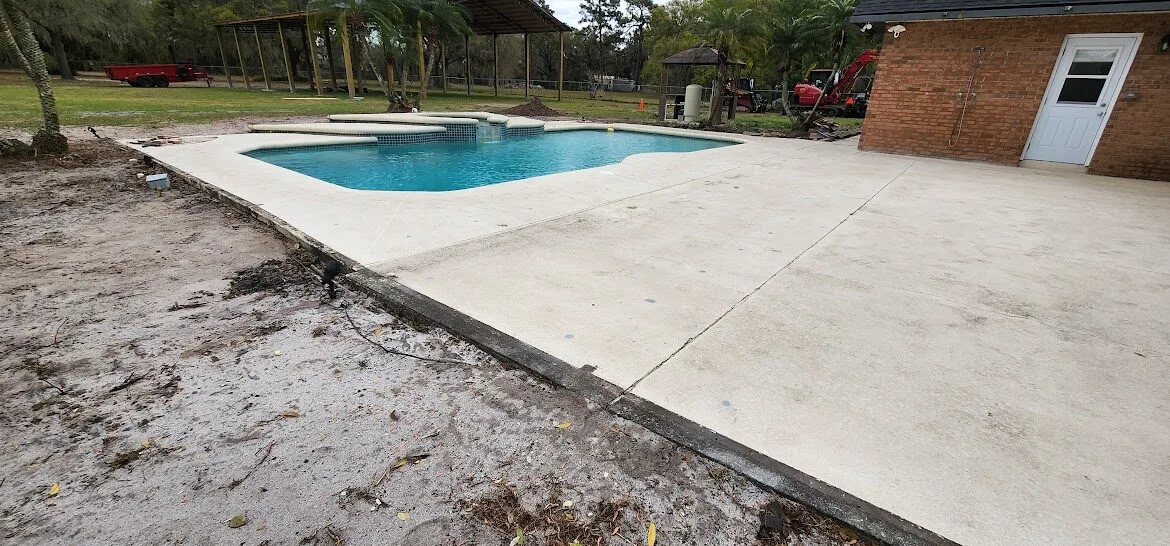
Concrete Lifting & Soil Stabilization in Spring Hill
When the Problem Starts Below the Surface
In Spring Hill, concrete problems don’t always begin with the concrete itself. What shows up at the surface may actually start underneath it, where changing conditions can leave a slab with less support than it had when it was poured.
Water may find a path along a slab edge, fill beneath the concrete can settle, or a small opening underneath can grow over time. Eventually, the concrete above may begin to respond.
That’s why a crack alone doesn’t tell the whole story. Before deciding whether concrete should be lifted, resurfaced or replaced, it helps to understand whether it is still properly supported underneath.
Environmental Foam Solutions (EFS) provides polyurethane concrete lifting, leveling, void filling and soil stabilization throughout Spring Hill and surrounding Hernando County. Shawn brings more than 25 years of experience in stabilization and field operations to every project.
EFS is owner-operated with no sales team and no crews. When you call us, you’re dealing directly with Shawn and Jessica, the same people who inspect your concrete and perform the work.
Lift • Level • Stabilize
Owner-operated • Licensed & insured • Serving Florida since 2016
Contact EFS today to schedule your free inspection.
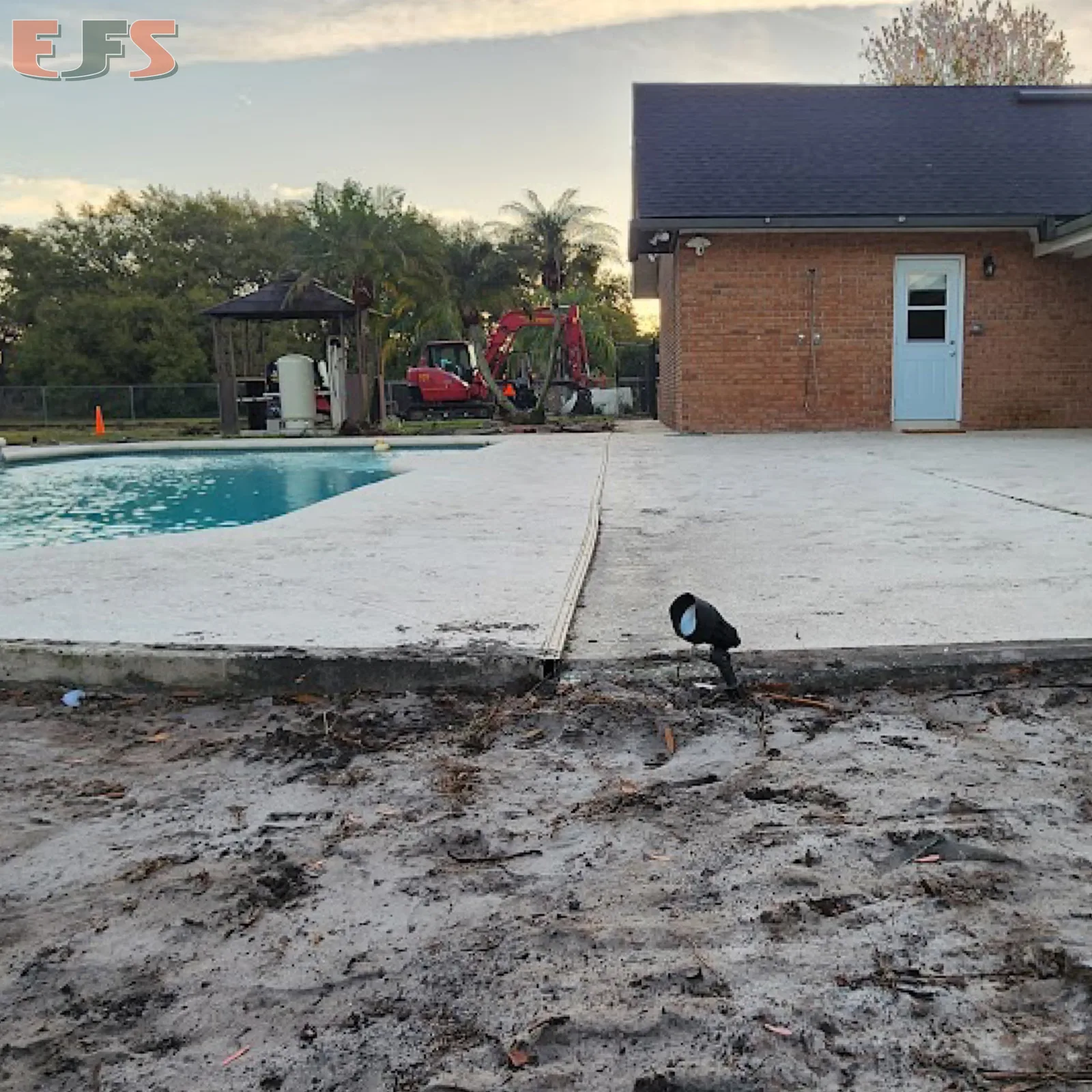
Why Support Changes Beneath Concrete
Spring Hill is a large residential community, and conditions can vary even between properties in the same neighborhood. Homes around Spring Hill Drive and Mariner Boulevard may have different drainage patterns than properties farther west toward US 19 or north toward Weeki Wachee.
Roof runoff, irrigation, landscaping and the natural grade of a property can repeatedly direct water toward one area. Leaks can do the same thing without being immediately obvious. In other cases, fill placed beneath the concrete may simply settle over time.
Spring Hill is also part of Florida’s karst landscape. That doesn’t mean an uneven slab or driveway crack is evidence of a sinkhole. Concrete can move for much more ordinary reasons, including erosion, drainage problems, leaks and settlement.
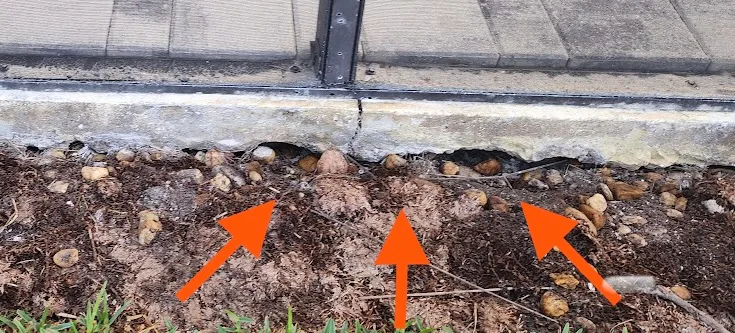
Sometimes the best clue is at the edge of the slab, where a gap or missing soil shows that support underneath has changed.
A Slab Can Lose Support Before It Sinks
Concrete doesn’t necessarily have to look uneven to have a void underneath it.
A slab can remain close to its original elevation while an unsupported area develops below. If the concrete is already where it needs to be, the goal isn’t to unnecessarily lift it. The repair may simply involve filling the void and restoring support while keeping movement to a minimum.
That’s an important difference between lifting concrete and stabilizing it.
Check Your Pool Deck Before Resurfacing
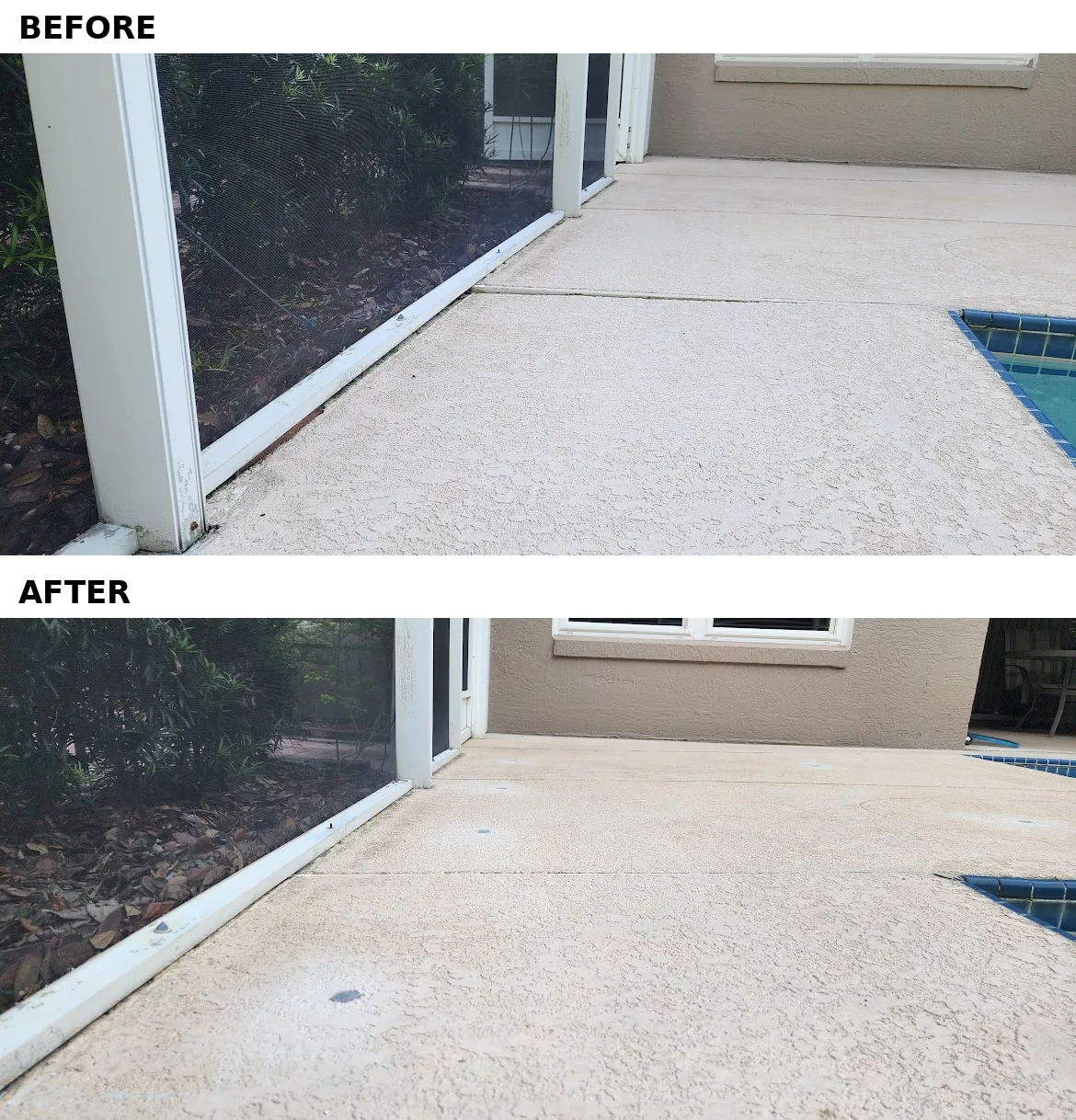
Spring Hill has plenty of screened pools, and changes in a pool deck can affect more than appearance. Settlement can alter drainage, create uneven transitions or sometimes contribute to a screen door beginning to drag or no longer close correctly.
If you’re planning to resurface an older pool deck, it makes sense to evaluate the concrete first.
Resurfacing improves the surface, but it can’t replace support that has disappeared underneath it. If the concrete itself is still in repairable condition, lifting or stabilization may address the underlying problem while allowing the existing deck to remain in place.
Once necessary movement or support issues have been addressed, resurfacing, coatings or cosmetic crack repairs can be considered afterward.
When a Driveway Starts Changing
A driveway may begin showing changes when one section settles below another, a joint develops a noticeable height difference or water starts following a path it didn’t before.
Those changes don’t automatically tell us what happened underneath, but they can help identify where movement has occurred.
When the existing concrete remains usable, polyurethane lifting may be an alternative to removing and repouring the affected area. If the elevation is acceptable but support is missing underneath, stabilization may be the more important part of the repair.
Sidewalks and Trip Hazards
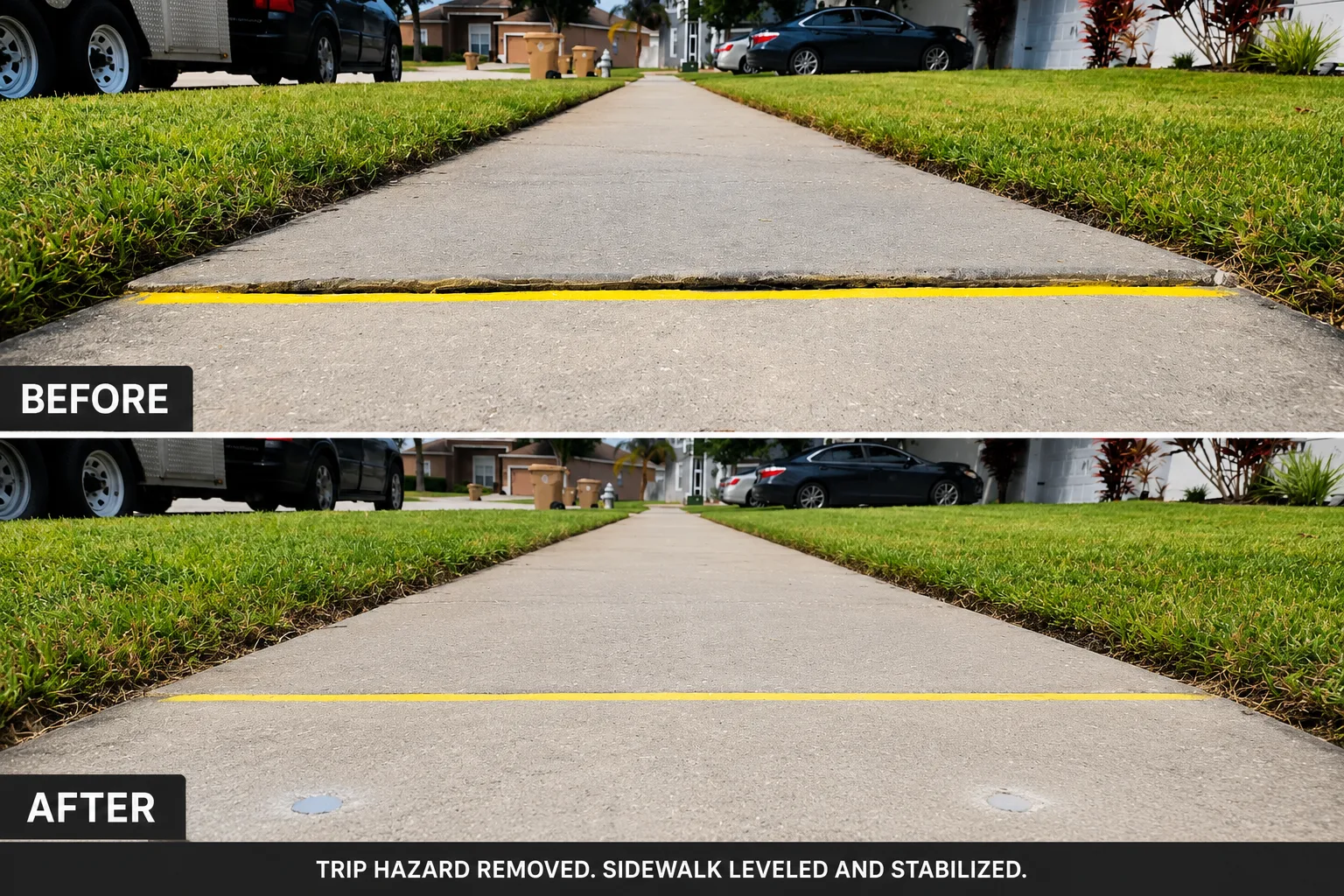
Even a small change between sidewalk panels can create an uneven walking surface or trip hazard.
The reason for that change can vary. A lower panel may have settled, water may have carried material away from an exposed edge, or roots and landscaping may have affected the surrounding area.
When settlement has lowered a panel and the concrete is otherwise in suitable condition, lifting may help correct the elevation difference without replacing the entire section.
EFS also works on residential, commercial and municipal trip-hazard correction.
How Polyurethane Concrete Lifting Works
When lifting or void filling is appropriate, small injection holes are drilled through the concrete so high-density polyurethane can be placed beneath the slab.
As the material expands, it fills available space and helps restore support. When lifting is needed, controlled injection can also move the concrete toward the desired elevation.
EFS uses a rotating laser level during lifting to monitor movement as it happens instead of relying on appearance alone. The injection holes are patched after the work is complete.
Existing cracks may remain visible, and lifting doesn’t make old concrete new. The goal is to address the support and elevation problem while preserving usable concrete whenever practical.
Spring Hill and the Communities Around It
Concrete conditions can change as you travel through Hernando County.
Head northeast toward Brooksville and the terrain becomes more varied. Travel north toward Weeki Wachee, or west toward Hernando Beach, and water and coastal conditions begin playing a larger role.
Near waterfront properties, soil loss around seawalls can leave walkways, patios and other concrete without the support they once had. EFS provides landside seawall soil stabilization and void filling when conditions are appropriate.
Understanding those differences is one reason we evaluate the property in front of us rather than assuming every settled slab has the same cause.
What We Look at Before Recommending a Repair
We look at how adjoining slabs relate to one another, where movement appears to have occurred, whether there are visible openings or signs of soil loss and how water moves around the area.
What the homeowner has noticed can be useful too. A new low spot after rain, a screen door that recently started dragging or soil disappearing beneath an edge can help show where conditions have changed.
From there, we can determine whether lifting, void filling or stabilization makes sense.
And if we don’t believe polyurethane is the appropriate repair, we’ll tell you that too.
See What These Problems Look Like on Real Properties
Visit Our Work to see real EFS projects involving pool decks, driveways, sidewalks, seawall walkways and other concrete repairs throughout Florida.
Along with the photos, we explain what was happening at the property and how the repair addressed the settlement or support problem underneath it.
Schedule a Free Concrete Inspection in Spring Hill
If something about your concrete has changed, you don’t need to decide whether it needs lifting, stabilization, resurfacing or replacement before calling us.
That’s what the inspection is for.
EFS can evaluate the concrete, look for signs of lost support or settlement and explain what we believe is happening underneath it. If polyurethane lifting, void filling or soil stabilization is appropriate, we’ll explain how we would approach the repair.
We provide concrete lifting, leveling and soil stabilization throughout Central Florida, including Spring Hill and surrounding communities.
Call EFS at 352-799-8000 to schedule your free Spring Hill concrete inspection.
Lift • Level • Stabilize