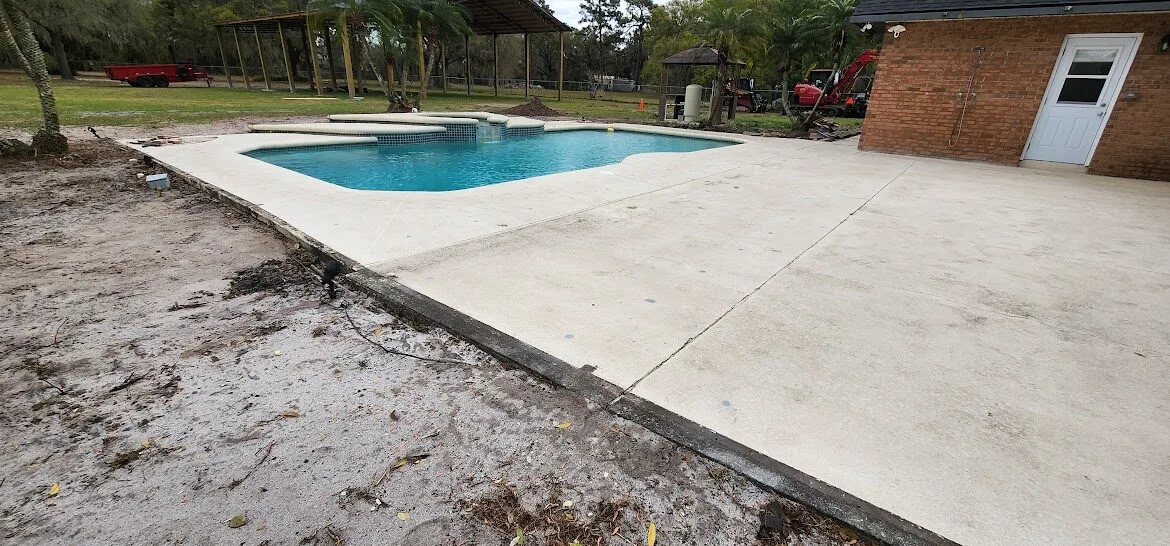
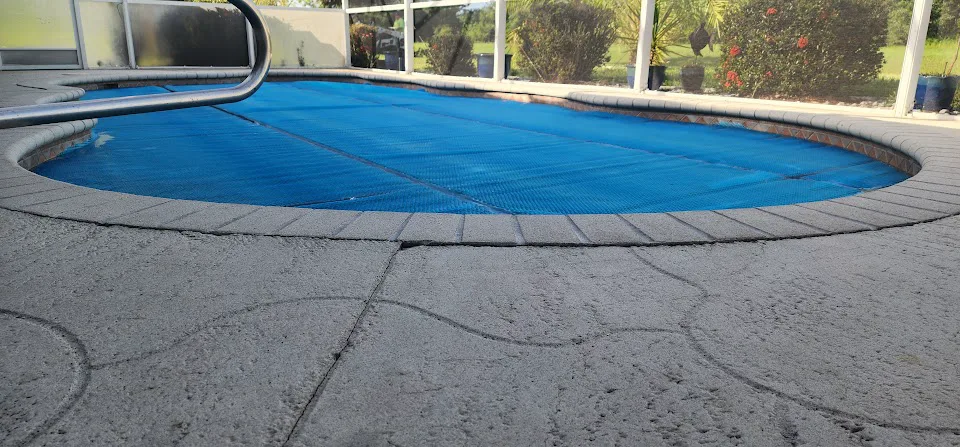
If you are thinking about resurfacing your pool deck because of cracks, worn areas or damage that keeps coming back, it may be worth finding out what is happening underneath the concrete first.
A cracked pool deck is frustrating enough the first time. It becomes even more frustrating when the crack is repaired, the deck is resurfaced, the coping is fixed or damaged tile is replaced, only for the same problem to return later.
When that happens, the problem may not be the surface.
Sometimes a crack, loose coping, separating joint or damaged tile is the visible sign of movement happening in the concrete around the pool. If sections of the deck are settling or losing support underneath, repairing only what you see may improve the appearance without correcting the underlying problem.
Environmental Foam Solutions provides pool deck repair and polyurethane concrete lifting throughout Central Florida. We evaluate sinking and unsupported concrete to determine whether lifting, void filling or soil stabilization should happen before resurfacing or other finish work begins.
We do not resurface pool decks, install decorative coatings, replace coping or repair pool tile. Our job is to address settlement and lost support beneath the concrete.
Why Does My Pool Deck Crack Keep Coming Back?
Concrete can crack for many reasons, and not every crack means a slab is sinking. Shrinkage, temperature changes, installation conditions and normal aging can all contribute.
But recurring cracks deserve a closer look.
When one portion of a pool deck moves differently than another, stress develops in the concrete. A crack may be filled or patched, but if the slab continues moving, that repaired area can eventually open again.
The soil beneath the deck plays an important role in supporting the concrete. If the soil settles, erodes, washes away or was not properly compacted during construction, empty spaces can develop beneath the slab.
The concrete may bridge over those spaces for a while before eventually settling.
Filling a crack does not replace the missing support underneath the concrete.
A crack with one side higher than the other, a crack that continues widening, or a crack accompanied by sinking concrete or separation near the pool edge may indicate that the deck is moving.
These signs deserve a closer look before the crack is filled or the entire deck is resurfaced.
Thinking About Pool Deck Resurfacing?
Pool deck resurfacing can dramatically improve the appearance of an older pool area. When the existing concrete is stable and the primary issue is surface wear, discoloration or texture, resurfacing may be exactly what the deck needs.
But resurfacing and concrete stabilization solve two different problems.
Resurfacing changes the surface you see. Concrete lifting, void filling and soil stabilization address the support underneath the slab.
If sections of the deck are sinking or becoming unsupported, a new finish does not stop that movement.
The deck may look beautiful immediately after resurfacing, but if the concrete continues moving, cracks or separation can eventually appear in the new surface.
That is why we encourage homeowners to investigate recurring problems before covering them with another finish.
Fix the Movement Before You Cover the Evidence
Existing concrete often provides clues about what has been happening around the pool.
A crack that has been repaired several times, a section that sits lower than the surrounding concrete, or a joint that repeatedly opens can indicate that something has changed.
Water collecting in a new low spot can provide another clue.
Once the deck is resurfaced, some of those signs become harder to see.
That does not mean every cracked pool deck needs polyurethane lifting. It means recurring movement deserves to be evaluated before more money is invested in the surface.
If the concrete is stable, resurfacing may be all that is needed. If it is settling, correcting the underlying problem first may help protect the work that follows.
Loose Pool Coping May Not Always Be a Coping Problem
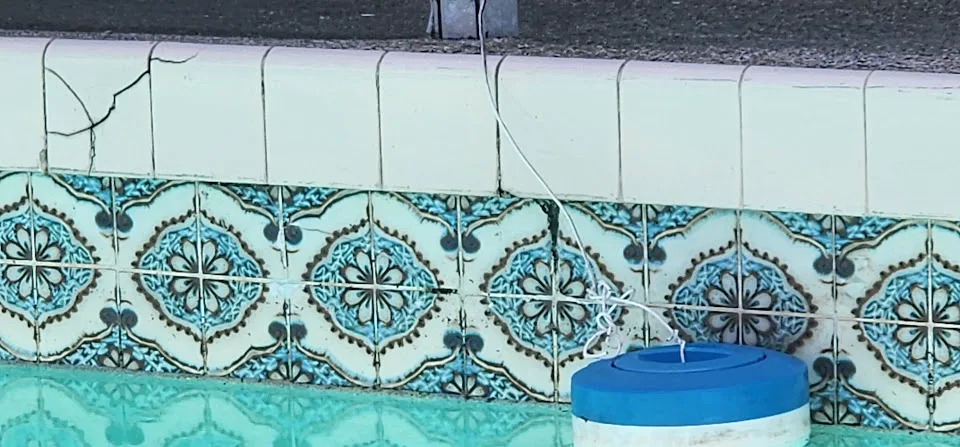
When pool coping becomes loose or repeatedly separates, most homeowners understandably call someone who repairs coping.
Sometimes the coping itself is the problem. But sometimes the surrounding concrete deck is moving in relation to the pool.
The pool structure and surrounding deck are separate systems that do not always move together. If the deck settles away from the pool, stress can develop where those areas meet.
A joint may begin opening, caulk may repeatedly separate, or a gap may develop near the coping.
If the surrounding concrete is contributing to that movement, repairing only the coping may not solve the entire problem.
When the same repair keeps failing, it is worth asking whether the concrete around the coping is continuing to move.
Why Does Pool Tile Keep Cracking or Popping Loose?
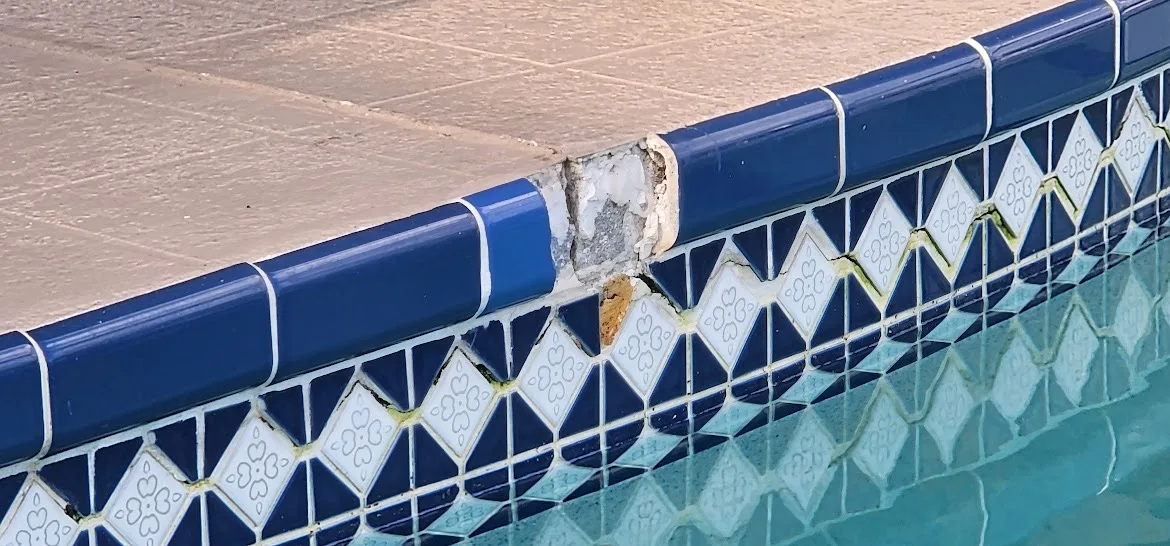
Pool tile can crack or become loose because of installation problems, moisture, expansion, aging or issues involving the pool structure itself.
But when repeated tile problems occur near a section of deck that is also showing settlement, cracking or separation, movement in the surrounding concrete is worth investigating.
A settling deck can change the relationship between the pool structure, coping and adjacent concrete. Movement where these materials meet may contribute to recurring damage.
This does not mean polyurethane lifting is the answer to every tile problem.
It means that when the same area keeps failing, homeowners may need to look beyond the tile to understand what is happening around it.
Cracks in Your Pool? The Surrounding Deck May Be Part of the Problem
When homeowners notice cracks in their swimming pool, they naturally focus on repairing the pool itself.
But if the surrounding concrete deck is settling or moving in relation to the pool structure, that movement may contribute to separation and damage around the pool edge.
If cracks in the pool are accompanied by loose coping, popping tile, widening gaps or uneven concrete, it may be worth evaluating the deck before making repeated repairs.
Cracks in a pool shell can have other causes, including problems involving the pool structure itself. They should not automatically be attributed to deck settlement.
EFS can evaluate the surrounding concrete for signs of settlement and lost support, while a qualified pool repair professional evaluates the pool structure.
Understanding which part of the pool area is moving helps determine which repairs are appropriate.
Why Pool Decks Lose Support in Central Florida
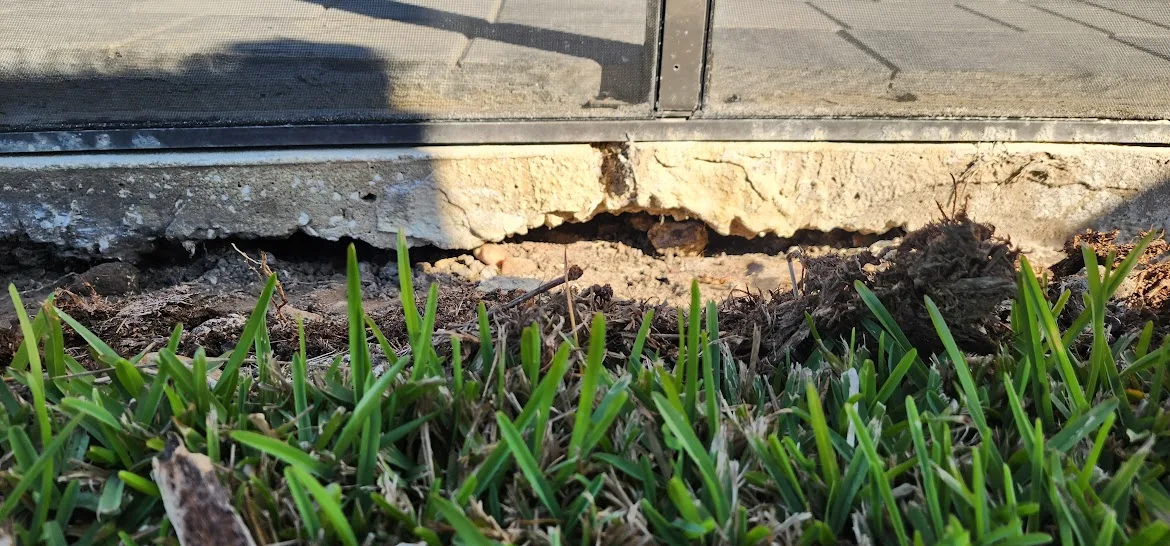
Many Central Florida properties have sandy soils that allow water to move through them relatively easily.
When water repeatedly travels beneath or alongside concrete, it can gradually carry soil away. Over time, empty spaces may develop beneath the slab.
Heavy rain, poorly directed downspouts, irrigation runoff and drainage problems can contribute to erosion. Pool or plumbing leaks may also introduce water into areas where it was not intended.
Other settlement problems begin during construction.
Fill placed around a newly constructed pool needs proper compaction. If portions of that material remain loose, they can gradually compress beneath the weight of the concrete.
The slab above may begin moving downward as the supporting soil settles.
That is one reason a pool deck can develop settlement problems years after the pool was originally installed.
A Crack Is Sometimes the Symptom, Not the Problem
Homeowners naturally focus on the crack because that is what they can see.
But when a section of concrete drops, something has usually changed underneath it. Soil may have settled, material may have washed away or a void may have developed.
The concrete responds to those changes.
Sometimes the crack is simply what happens afterward.
That distinction matters because repairing only the visible damage may not address the reason it occurred.
EFS evaluates how different sections of concrete are sitting in relation to one another and looks for signs that the slab has lost support underneath.
How Polyurethane Concrete Lifting Works
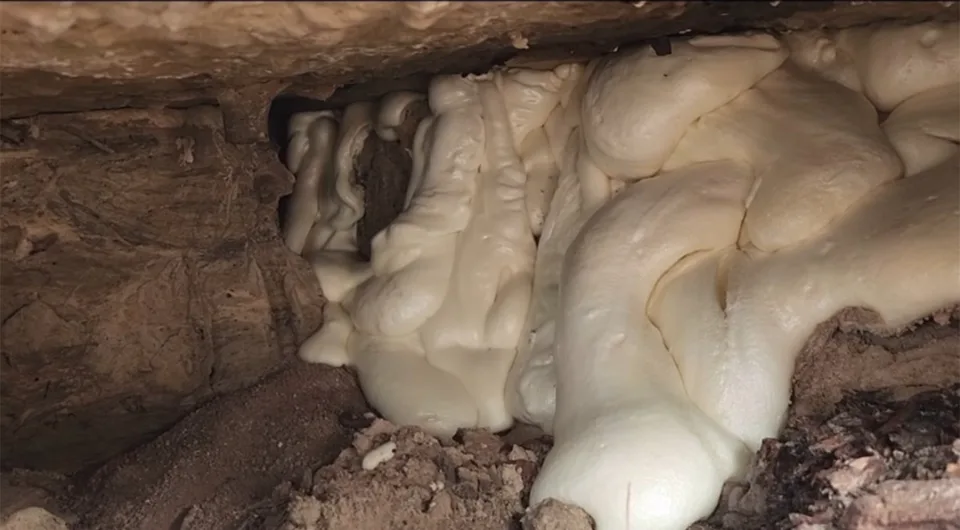
When polyurethane lifting is appropriate, we drill small injection ports through the existing concrete and inject a two-part structural polyurethane beneath the slab.
As the material reacts, it expands and can fill empty spaces beneath the concrete. Depending on the conditions, it can also restore support and carefully lift settled sections.
We use a rotating laser level while lifting concrete to monitor movement throughout the repair.
Because the existing concrete remains in place, polyurethane lifting can often correct settlement without removing and replacing otherwise usable sections of a pool deck.
The goal is not simply to improve the appearance of the surface. It is to address the loss of support that allowed the concrete to settle.
When Soil Stabilization or Void Filling Is Needed
Sometimes the problem extends beyond an empty space directly beneath the slab.
Water movement, erosion or loose fill can affect deeper material supporting the concrete.
In these situations, additional polyurethane injections may be appropriate to help stabilize the supporting soil.
Concrete lifting addresses the position of settled concrete. Void filling restores support where empty spaces have developed. Soil stabilization addresses unstable material beneath the slab.
Depending on site conditions, a repair may involve one or a combination of these methods.
Learn more about our soil stabilization and void filling services.
What If My Pool Deck Sounds Hollow?
Some homeowners first notice a problem because one section of the pool deck sounds different from another.
A hollow sound can sometimes indicate that the concrete is no longer fully supported underneath.
The slab may not have dropped significantly yet. It may still be bridging over an unsupported area.
A hollow sound alone does not prove that a void exists, but it can be a reason to investigate.
When a void is confirmed, polyurethane injection may help restore support before significant settlement develops.
Pool Deck Drainage Can Change as Concrete Moves
Water collecting on a pool deck can also provide clues.
If an area that previously drained correctly suddenly begins holding water, the position of the concrete may have changed.
Even a relatively small amount of settlement can create a low spot.
Standing water does not automatically mean lifting is needed, but when it appears alongside cracks, uneven slabs or separation, it deserves attention.
Any ongoing drainage or erosion problem should also be addressed whenever possible. Stabilizing concrete without correcting the conditions contributing to soil loss can allow settlement to continue.
Should the Pool Deck Be Repaired Before Resurfacing?
If the deck is visibly uneven, has settled sections or contains cracks that repeatedly return after repair, evaluating the concrete before resurfacing makes sense.
That does not mean resurfacing is unnecessary.
You may ultimately need both services.
EFS handles the concrete lifting, void filling and stabilization. Your resurfacing or coating contractor handles the finished appearance.
When settlement is contributing to the damage, addressing it first may help avoid repeated surface repairs.
Why Repeated Surface Repairs Can Become Expensive
A homeowner may pay to fill a crack, repair a joint, replace coping, fix tile and eventually resurface the entire deck.
If the concrete underneath continues moving, some of that work may need to be repeated.
Identifying the cause before investing in another finish can help avoid unnecessary repairs and additional expense.
Sometimes the least expensive repair is not the one with the lowest initial price. It is the one that addresses the underlying problem rather than repeatedly treating the same symptom.
Pool Deck Repair Throughout Central Florida
Environmental Foam Solutions provides polyurethane concrete lifting, void filling and soil stabilization for existing pool decks throughout Central Florida.
We evaluate sinking concrete, uneven slabs, recurring settlement cracks, unsupported areas, erosion and voids beneath pool decks.
Our service area includes Brooksville, Spring Hill, Weeki Wachee, Dade City, Zephyrhills, Wesley Chapel, Lutz, Inverness, Homosassa, Crystal River, Clermont, Groveland and surrounding communities.
We do not sell resurfacing, decorative coatings, tile replacement or coping repair. Our work focuses on the concrete and the material supporting it.
Before You Resurface, Find Out Why the Pool Deck Is Moving
If your pool deck has a crack that keeps coming back, coping that repeatedly loosens, tile problems near the same area, sinking concrete or gaps that continue reopening, another surface repair may not be the complete answer.
EFS can evaluate the existing concrete, look for signs of settlement or lost support and explain whether polyurethane lifting, void filling or soil stabilization may be appropriate.
If the concrete is stable, you can move forward with your resurfacing or finish contractor. If it is moving, you will know before you cover it.
Fix the movement first. Then make it pretty.
Call Environmental Foam Solutions at 352-799-8000 to schedule your free Central Florida pool deck inspection.
Lift • Level • Stabilize